
Debertz can be played by two, three or four players.
Deck
The game uses a deck of 32 cards (from ace to seven of each suit).
Card seniority
(By growth)
Non-trump suit: seven, eight, nine, jack, queen, king, ten, ace.
Trump suits: seven, eight, queen, king, ten, ace, nine, jack.
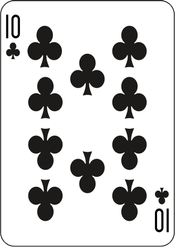
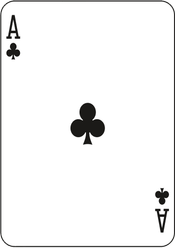
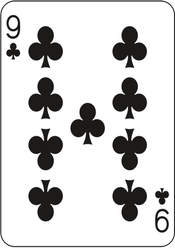
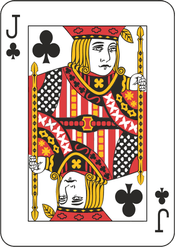
Goal games
In a game consisting of several moves, the first player must score 501 points (short debertz) during the game of two and 1001 (long debertz) during the game of two, three or four. The required number of points can vary, yes, some regions play up to 1001 points when playing with three or four.
Game process
Surrender and bidding
The player who passes for the first time is determined by lot (randomly). The surrender in all subsequent draws is made by the player who won the previous draw (or alternately). Each player is dealt six cards clockwise, usually, three cards are dealt. After passing, a potential trump is opened, on which the remainder of the deck is placed perpendicularly. Then the player sitting to the left of the passer, based on what cards he has, has the right to declare an agreement to play that trump, indicated by the face-up card suit, or to refuse to play that trump suit with the word "pass". After a player's pass, the same right goes to the passer during a two-way game, to the next player during a three-way game, and if he also refuses, then to the passer. If all players have refused to play with an open trump, the player sitting to the left of the surrendering player has the right to declare another suit as trump or pass. After a pass, the right to declare a trump suit passes to the next player, and after his refusal - to the one who folds. The game is impossible without a trump card. If all players have refused to play, the cards are collected from the table and passed to the next player. By prior agreement of the players, there is a version of the game "with obligation" (hark. "obligation"), where if all players say "pass", then the player who passes must play, and there is no repass.
When a player has chosen a trump, he is said to “play” and chooses a suit.
If a trump card has been announced in one way or another, the dealer must deal three more buying cards to each of the players (leaving the card that was a potential trump face up), open the remaining bottom card of the deck and put it face up on top logs This map (sometimes referred to as a “miller”) has no meaning other than informational. This rule applies to the game of twos and threes since there are only 32 cards in the deck, and during the game of fours, the trick is only two cards and the last card (which indicates the initial trump) goes to the player who folds (the cutter does not open during the game of fours).
Thus, each player plays nine cards (when playing with two or three) or eight cards (when playing with four) before the handover (cone) begins.
There is a separate rule: during a game declared with a trump suit that is exposed immediately after a deal, any player who has a trump seven has the right (but not the obligation) to replace it with a trump face up on the table, both before the call and after, but before the first move in the game (by agreement - before raising purchase cards).
A player who has four sevens (both before the call and with the call cards) has the right to demand a redeal by presenting those cards at any time before the first turn of the game.
After the end of the bidding process, the combination application process begins.
Combinations and their application
There are four types of combinations in the classic game
- Terc: three cards of the same suit in a row, for example, 7,8,9.
- fifty (four cards of the same suit in a row, for example, 7,8,9,10.
- debertz: seven cards of the same suit in a row
- Bella: trump suit, i.e. trump queens and kings.
To determine threes and "fifties" the "usual" order of cards is used: seven, eight, nine, ten, jack, queen, king, ace. That is, for example, the trident is an ace, king, queen, and not an ace, ten, king, and even more so, not a jack, nine, ace. The same card does not have to be in different combinations, but the cards that make up the bella can be in any other combination.
It is allowed not to participate in the auction, even if the player has combination designs.
Threes and fifties are declared by the players in turn, starting with the player sitting to the left of the dealer (of course, if there are two players, then the player opposite) until the start of the game. If other players have combinations, then the announced combinations go into the calculation of one or another player only according to seniority. Only one player in the game can count combinations, and all available to him, other players are not counted (exception may be a two-on-two (2 x 2) game by agreement).
The seniority rules are as follows:
- Any fifty is older than any third. This means that a player who has fifty "on his hands" can (probably) score points for it at the end of the hand, even if the other player has three checkers on his hands. The latter will simply not be taken into account.
- In the case of identical combinations, the higher combination will prevail. That is, ace, king and queen are higher than the combination of king, queen and jack. The first third will count, and the second will not bring its owner (opponent) any points.
- In case of equality of the same combinations, the trump combination will have the advantage.
- If both levels of the combination are non-trump, then the combination will be considered declared by the player in the order of the turn. For example, in a three-way game, the player sitting after the dealer (A) and the player next to him (B) have the same non-trump fifties. In this case, "A" will be considered the player who announced the fifty.
- A combination with a higher seniority (or so-called "height") is counted even if the opponent has several combinations with a lower seniority in his hands. For example, if player "A" has two threes with the seniority of the Jack, and player "B" has one-third with the seniority of the Queen, then the threes of player "A" lose.
Bella is not announced before the start of the game: the player has the right (but is not obliged) to announce her by saying "Bella" at the first exit of any card from her composition, namely - it is forbidden to announce at the exit of the second card (sometimes it is stipulated that Bella announced on any turn). The announcement of Bella does not depend on the results of the auction.
Unannounced combinations do not count.
Game
During the game, players take "bribes". The first move is made by the player sitting behind the player on the left hand. On the card discarded by the player, the next player places his card in the suit, in the absence of a suit - a trump (mandatory), in the absence of a suit and a trump - discards any card.
- open cards of the same suit: the one who made the move with the card of the highest rank wins the trick.
- open cards of different non-trump suits: the bribe is won by the one who made the move with the lower card, if there are several cards of its suit, then with the higher-ranking card of its suit.
- open cards are non-trump and trump cards: the bribe is won by the one who made the move with a trump, if there are several trumps, then with a trump of the highest rank.
There is one more feature in the game:
- If the next player has a lower trump and a higher trump than the only or higher trump of the exposed cards, then the player must play the higher trump ("beat the trump").
Counting points
Players add up the points of the cards contained in their tricks. Cards are rated as follows:
- seven, eight and nine (except the trump nine) do not bring points
- ace — 11 points
- ten — 10 points
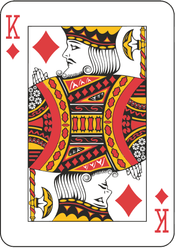
- king - 4 points
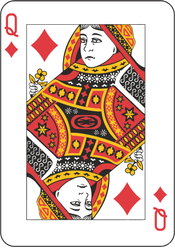
- dame - 3 points
- jack (except trump) — 2 points
- trump jack — 20 points
- trump nine — 14 points
Bonuses for combinations and a bonus for the last trick (so-called the last).
- trident — 20 points (respectively, two tridents — 40 points, three — 60 points)
- fifty — 50 points (respectively, two fifties — 100 points)
- Bella — 20 points
- the last (last trick) — 10 points
Yes, you can score 162 points for passing in a game without combinations (11 x 4 + 10 x 4 + 4 x 4 + 3 x 4 + 2 x 3 + 20 + 14 + 10). Such a hand (game) is called "one hundred and sixty-two". If, for example, a third was announced during the pass, it is called "one hundred and eighty-second" (162 + 20 for a third), etc. This is convenient during the game "two on two" (2x2), when, after counting the points of one team, the points of the other are determined by subtracting the points of the first team from the "handover number" (because only during the game of four, the game is played with all the cards of the deck).
Points for threes and fifties are recorded for the player only if he has taken at least one trick, even if it is empty (without points). Points for Bella are scored in any case (of course, if it was announced). It is advisable to stipulate such points before the game begins, since in some versions of the rules, fifty or thirds are recorded in any case, and for Bella, on the contrary, you must necessarily take one thread.
The points received by the players are recorded in the table.
In each turn, the player who announced the trump is obliged to take more points than the opponent during the game of two and both opponents during the game of three. In the event that the player who announced the trump took less points than the opponent, his points are counted against the opponent's points, and the player is given a so-called “Failed contract”, which is denoted by the letter "B" in the table. In the event that the game takes place in threes, then the player's points are credited to one of the two opponents who took more points.
The following two situations related to the equality of points may occur:
- when the opponent(s) of the playing player scored the same number of points as him. In this case, points are recorded separately (the so-called "Controversial failed contract"). They will be awarded to the player, including the player, who will score more points in the next hand (or by agreement, the points of the hanging bid go to the announcer). At the same time, the player whose points "hang" on the game makes the next pass.
- when a failed contract game occurred during a three-way game, but at the same time both opponents of the playing player scored the same number of points. In this case, the points of the playing player are also recorded separately and will be awarded to the player's opponent who scores more points in the next round. The player who received the failed contract does not claim them.
The party consists of several passes. The game is won by the first player to score 301 points or 501 points in a three-way game.
Only one player (or a team during a two-on-two game) wins the game.
Klabor
The Odesa version of the game is characterized by stricter rules and is called "klabor". Some game terms also have different names.
- The game consists of small (short 501 points) and large (long 1001 points) games.
- During the four-person game, two players play in pairs.
- The player who is playing goes first, not the one sitting to the left of the player who passes.
- cards are dealt to the players in turn, clockwise, not to the winning player.
- A bell can only be declared when a player places a trump queen or king. One of the variants of the rules of the game ("stringer") requires the player (pair) announcing the Bella to take both cards for it to be counted.
- If during the game a player (pair) does not take any tricks, it is called "skiing" or "skiing" and 100 points are deducted from the player's (pair) total score.
- The player (pair) who scored 3 failed contracts during the game (not necessarily in a row) subtracts 100 points from his account. In addition, for each subsequent failed contract during the game (Fail 4, Fail 5, etc.), 100 points will be deducted from the player (pair).
- The dealing player starts dealing cards from the player to his left and further clockwise (when there are more than two players).
- When the second player is given the opportunity to choose a trump, he must name another suit (that is, one that was not a potential trump) and which will be a trump. This is called "Dealer". Thus, the passer does not have the right to pass twice and is obliged to play something if other players have saved, that is, he has more chances to get a failed contract.
- if the opponents score the same number of points, a "tie" is announced, the cards are not handed over by the next player in order, but by the one who chose the trump card last time.If the player (pair) who earned a tie wins this hand, the points will be recorded as appropriate, taking into account the points of the previous hand. If there is a failed contract, then the opponent will receive all points for both passes.
- A third or a fifty can be shown between the time the cards are dealt and the turn of the second trick.
- As a rule, it is customary to interrupt the opponent's trump, if the player has such an opportunity.
- In four-man play, the potential trump always goes to the dealer, as it is part of his draw.
Questions and answers
If both players/teams score enough points to win.
a. If the points are different: whoever has more points wins. For example Player Stepan scored 1003, and Bob - 1005, respectively, Bob wins
b. If “Controversial failed contract” are the same points: then we play one more game.
c. If the points are the same: the one who plays wins